Lesson 1 support video — My Day in the Hospital
Hospital Shift Mission | My Day in the Hospital
ثالث ثانوي • 2027
مسار كامل لطالب ثالث ثانوي يبدأ الإنجليزي من الصفر: 30 درسًا مرتبة وحدة بوحدة، كل نقطة معها شرح وتطبيق وتدريب، ثم القصة والمراجعات.
شاهد تجربة حقيقية من داخل المسار قبل أن تبدأ
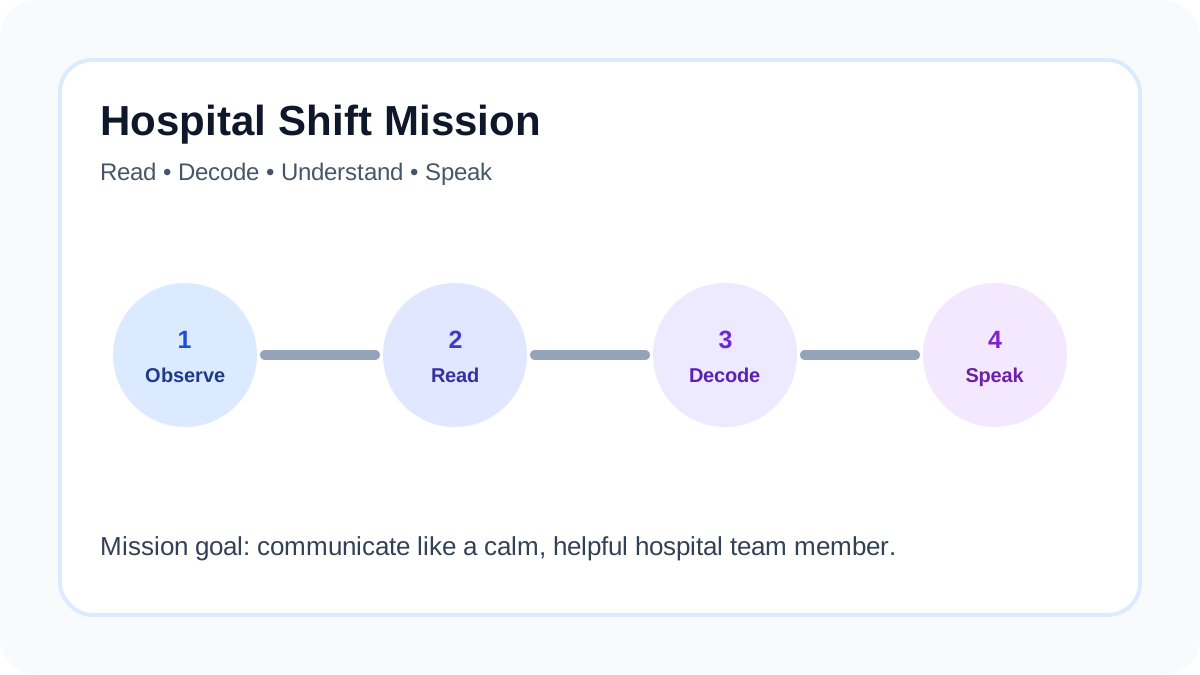
داخل المسار
Your shift starts now
مش مجرد وصف — دي معاينة من المحتوى الفعلي.
داخل المسار
صور وفيديوهات وأمثلة مأخوذة من المحتوى المنشور نفسه، حتى تعرف أسلوب التعلم قبل التسجيل.
en-US
B1 • General American • support: ar
en-US
B1 • General American • support: ar
en-US
B1 • General American • support: ar
en-US
B1 • General American • support: ar
en-US
B1 • General American • support: ar
en-US
B1 • General American • support: ar
Lesson 1 support video — My Day in the Hospital
Hospital Shift Mission | My Day in the Hospital
Unit 1 vocabulary support — Inside the World of Care
Hospital Shift Mission | My Day in the Hospital
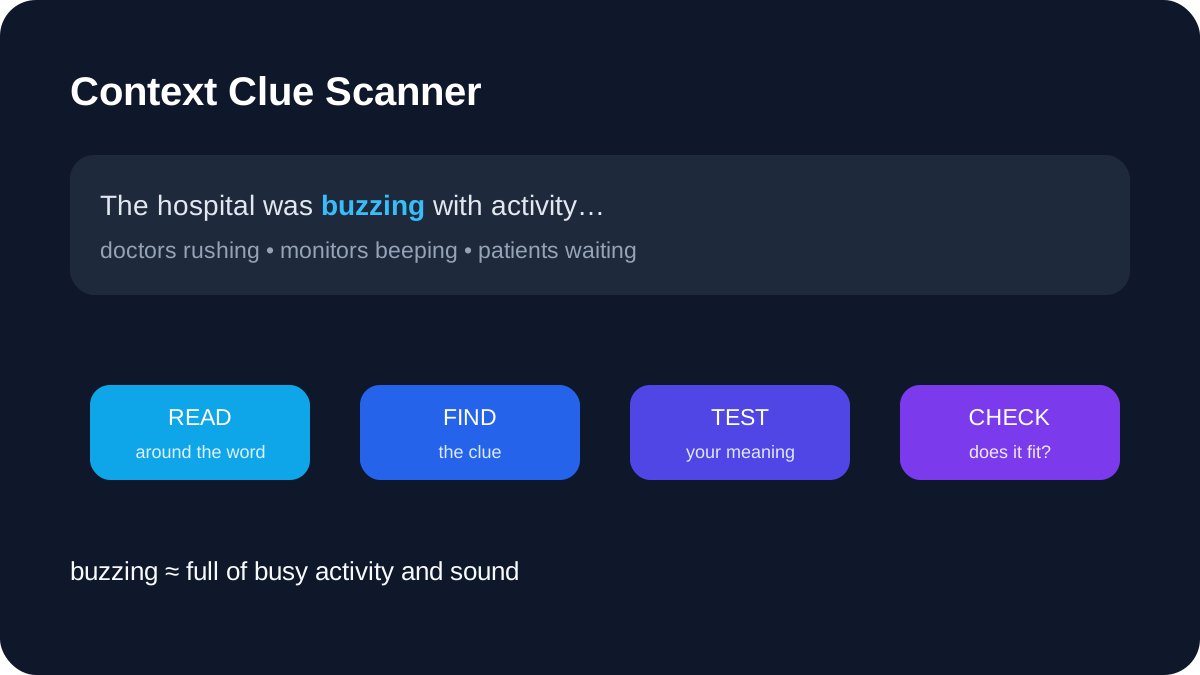
Don’t open the dictionary yet
Hospital Shift Mission | My Day in the Hospital
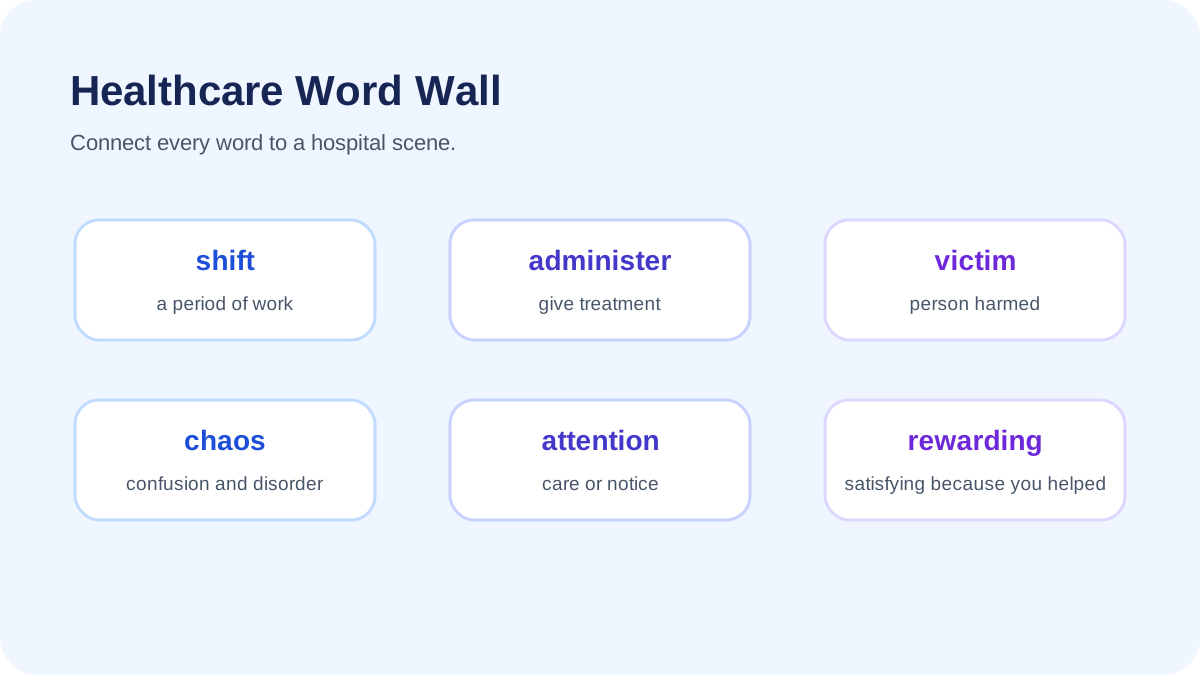
Hospital word wall
Hospital Shift Mission | My Day in the Hospital
Your shift starts now
Hospital shift listening — gist and key details
الدعم
الرحلة مش حفظ كلمات؛ دي مهمة كاملة.
Hospital shift mission
الدعم
قبل القراءة توقّع المشهد والصفات المطلوبة.
Good readers activate what they already know before reading.
الدعم
ركز على الفكرة العامة والدليل.
Sarah checks patient information, gives medication, supports the emergency team, and documents progress. The work is exhausting, but she still feels fulfilled because she helps people and relies on teamwork.
الدعم
استنتج من السياق الأول.
Context clues
الدعم
اربط الكلمة بالمشهد.
Healthcare vocabulary
الدعم
استخدم الكلمة مش بس اعرف معناها.
You master a word when you can use it naturally in a new situation.
خطة التعلم
اتعلم الدرس نقطة بنقطة، شاهد الدعم المرئي، طبّق، ثم اثبت الإتقان قبل الانتقال.
Core outcomes: My Day in the Hospital
Master the source-grounded outcomes and language skills taught in My Day in the Hospital.
Read for main idea, details and inference in a healthcare text
Identify the main idea, explicit details, causes, and inferred attitudes in the hospital-nurse reading.
Healthcare vocabulary in context
Understand and use shift, buzz, administer, attention, victim, chaos, heartbreaking, rewarding, rollercoaster and related healthcare vocabulary from context.
Understand idioms and non-literal meaning
Infer the meaning and use of expressions such as spring into action and teamwork makes the dream work.
Hospital nurse–patient role-play
Ask about symptoms, collect key information, reassure a patient, and respond naturally in a healthcare role-play.
Activate prior knowledge and predict a healthcare text
Use pre-reading questions to predict hospital roles, nursing qualities and possible future healthcare technology.
اتعلم الدرس نقطة بنقطة، شاهد الدعم المرئي، طبّق، ثم اثبت الإتقان قبل الانتقال.
Core outcomes: Emergency Call
Master the source-grounded outcomes and language skills taught in Emergency Call.
Listen for key details in an emergency call
Extract caller, patient, symptoms, actions, and emergency instructions from an ambulance-call listening context.
Emergency and first-aid vocabulary
Understand and use collapse, grab, chest, pulse, CPR, consciousness and paramedics accurately.
Reconstruct and extend a 123 emergency call
Reenact an emergency call, add medically relevant details, and use clear present-tense background information.
Activate emergency-call knowledge before listening
Recall ambulance numbers, emergency situations and the essential patient details a caller should provide before listening.
Verify emergency-call statements with listening evidence
Judge statements about the patient, medication and CPR as True or False using details from the audio.
اتعلم الدرس نقطة بنقطة، شاهد الدعم المرئي، طبّق، ثم اثبت الإتقان قبل الانتقال.
Core outcomes: Tired Hands, Caring Hearts
Master the source-grounded outcomes and language skills taught in Tired Hands, Caring Hearts.
Present Perfect Simple: meaning and form
Use the Present Perfect Simple for present results, experiences, quantities/frequency, and past actions still related to the present.
Present Perfect Simple in the passive
Form and use have/has + been + past participle in healthcare and general contexts.
Present Perfect Continuous: meaning and form
Use have/has been + -ing for duration, continuing actions, recent activity with visible results, and temporary situations.
Choose between Present Perfect Simple and Continuous
Select the tense that best expresses completed result, quantity, duration, continuation or visible result.
Detect and correct tense errors
Identify wrong participles, agreement and tense-choice errors and rewrite sentences accurately.
اتعلم الدرس نقطة بنقطة، شاهد الدعم المرئي، طبّق، ثم اثبت الإتقان قبل الانتقال.
Core outcomes: Beyond the White Coat
Master the source-grounded outcomes and language skills taught in Beyond the White Coat.
Read for events, atmosphere and character response
Track the sequence of ER events, infer emotions, and explain how teamwork changes outcomes.
Medical and emergency vocabulary in context
Understand stitch, forehead, groaning, moaned, clutched, swallow, scope and urgency from context.
Interpret idioms in an emergency-room narrative
Understand raining cats and dogs, soaked to the skin, jump into action and pale as a ghost in context.
Identify main idea, supporting details and text structure
Distinguish central message from evidence and recognize chronological/cause-and-effect organization.
Predict emergency-room challenges before reading
Use pre-reading discussion to anticipate workload, emergency response and staff emotions in a busy ER.
اتعلم الدرس نقطة بنقطة، شاهد الدعم المرئي، طبّق، ثم اثبت الإتقان قبل الانتقال.
Core outcomes: My Blog Post
Master the source-grounded outcomes and language skills taught in My Blog Post.
Understand the purpose and tone of a blog post
Recognize a blog post as engaging, topic-focused, informal or semi-formal writing for online readers.
Organize a blog post into title, introduction, body and conclusion
Use the four-part blog structure and understand the purpose of each section.
Analyze and reorder a model blog post
Label and logically arrange a mixed draft by identifying title, introduction, body development and conclusion.
Write a 180–200 word personal blog post
Plan and produce an engaging personal blog post with coherent paragraphs, relevant details and a closing reflection.
Create a catchy and relevant blog title
Write a headline that attracts attention while clearly signaling the blog topic.
اتعلم الدرس نقطة بنقطة، شاهد الدعم المرئي، طبّق، ثم اثبت الإتقان قبل الانتقال.
Core outcomes: Machines in Egypt: Past and Present
Master the source-grounded outcomes and language skills taught in Machines in Egypt: Past and Present.
Trace machines in Egypt from ancient tools to modern technology
Understand the historical progression from levers and ramps through industrial machinery to AI, robots and smart infrastructure.
Technology and history vocabulary in context
Understand and use dynasty, sophisticated, cotton gin, adopt, initiative and infrastructure from context.
Interpret machine-related idioms
Understand and use lay the groundwork and full steam ahead in appropriate contexts.
Present and evaluate an invented machine
Describe an invented machine, its purpose, benefits and possible problems in a short presentation.
Compare ancient and modern machines before reading
Use prior knowledge to compare simple ancient machines with modern technology and predict benefits or harms to traditional ways of life.
اتعلم الدرس نقطة بنقطة، شاهد الدعم المرئي، طبّق، ثم اثبت الإتقان قبل الانتقال.
Core outcomes: Technical Support Call
Master the source-grounded outcomes and language skills taught in Technical Support Call.
Listen for problem, cause, solution and prevention in technical support
Extract the customer's problem, urgency, troubleshooting steps, solution and prevention advice from a technical-support call.
Technical-support vocabulary
Understand and use drivers, version, right-click, troubleshoot, urgency, cables, offline, updated and technician.
Sequence troubleshooting instructions
Give and follow clear troubleshooting steps using appropriate commands, checks and solutions.
Role-play a customer–technician support call
Handle a device or internet problem using natural help requests, clarification and solution language.
Predict technician questions and troubleshooting steps
Use personal experience with device problems to predict what a technician may ask or check before listening.
اتعلم الدرس نقطة بنقطة، شاهد الدعم المرئي، طبّق، ثم اثبت الإتقان قبل الانتقال.
Core outcomes: The Role of Machines
Master the source-grounded outcomes and language skills taught in The Role of Machines.
Listen for viewpoints about the role of machines
Identify what different speakers say about machines, their benefits, risks and limits.
Reported statements: tense, pronoun and time shifts
Convert direct statements to reported speech with accurate backshift, pronoun changes and time-reference changes.
Reported commands and requests
Report commands and requests using told/ordered/asked/warned + object + to/not to + infinitive.
Describe how a machine works safely
Write a process description with purpose, ordered steps, safety precautions and a conclusion.
Give technical instructions and report them
Give device-use instructions, follow them, then accurately report the instructions to another audience.
اتعلم الدرس نقطة بنقطة، شاهد الدعم المرئي، طبّق، ثم اثبت الإتقان قبل الانتقال.
Core outcomes: Our Machine-Driven World
Master the source-grounded outcomes and language skills taught in Our Machine-Driven World.
Read for main idea, viewpoint and supporting evidence about machines
Identify the author's position, summarize key paragraphs and support conclusions with evidence.
Daily-life machine vocabulary and context clues
Understand household, appliances, chores, automated, track, standstill and efficiency and infer unfamiliar vocabulary from context.
Analyze risks of overdependence on machines
Evaluate how dependence on machines can affect skills, decision-making and daily life, and support an opinion with evidence.
Discuss who should control technology
Express and justify a position on whether humans should control machines or become overly dependent on them.
Activate everyday-machine experience before reading
Discuss machines used at home, school and in the street and predict how failure of a machine can affect daily life.
اتعلم الدرس نقطة بنقطة، شاهد الدعم المرئي، طبّق، ثم اثبت الإتقان قبل الانتقال.
Core outcomes: For or Against?
Master the source-grounded outcomes and language skills taught in For or Against?.
Structure an argumentative essay
Organize an argumentative essay into introduction, reasons with evidence, opposing view/refutation and conclusion.
State a claim and support it with reasons and evidence
Write a clear thesis and develop it using logical reasons, examples and evidence.
Present and refute an opposing view
Acknowledge a counterargument and respond to it using appropriate argumentative language.
Use linking and argumentative expressions accurately
Use connectors such as firstly, however, on the other hand, for example and in conclusion to create cohesion.
Write a 180–200 word for-or-against essay
Produce a coherent argumentative essay on a familiar issue with claim, evidence, counterargument and conclusion.
اتعلم الدرس نقطة بنقطة، شاهد الدعم المرئي، طبّق، ثم اثبت الإتقان قبل الانتقال.
Core outcomes: Climate Justice and Global Activism
Master the source-grounded outcomes and language skills taught in Climate Justice and Global Activism.
Understand climate justice and unequal climate impact
Explain climate justice, identify who causes and who suffers climate impacts, and understand equity and responsibility.
Read cause-and-effect relationships in climate texts
Trace causes, consequences and proposed responses using connectors and supporting evidence.
Climate justice vocabulary and idioms
Understand greenhouse gas emissions, marginalized communities, equity, bear the brunt, take the heat, shoulder the burden and face the music.
Use climate-related compound nouns
Recognize and use compound nouns such as climate change, greenhouse gas, carbon footprint, energy efficiency and rainfall pattern.
Discuss youth action for climate justice
Propose realistic community actions and justify how young people can contribute to climate justice.
اتعلم الدرس نقطة بنقطة، شاهد الدعم المرئي، طبّق، ثم اثبت الإتقان قبل الانتقال.
Core outcomes: An Interview with a Meteorologist
Master the source-grounded outcomes and language skills taught in An Interview with a Meteorologist.
Listen for gist and specific details in a meteorologist interview
Identify the meteorologist's role, prediction horizon, observed changes and future expectations for Egypt.
Weather expressions and forecast vocabulary
Understand and use scorching hot, boiling, baking, freezing cold, chilly, pouring with rain, humid, stormy, foggy and overcast.
Use meteorology vocabulary accurately
Use meteorologist, forecast, heat wave, extreme weather, scorching and pessimistic in context.
Discuss future weather and climate action
Agree, disagree, predict consequences and support an opinion about climate change in Egypt.
Activate weather knowledge before listening
Discuss typical Egyptian summer weather, recent unusual conditions and likely future changes before listening.
اتعلم الدرس نقطة بنقطة، شاهد الدعم المرئي، طبّق، ثم اثبت الإتقان قبل الانتقال.
Core outcomes: Climate Change and Coastal Cities
Master the source-grounded outcomes and language skills taught in Climate Change and Coastal Cities.
Listen for causes, risks and solutions in coastal cities
Extract risks to Alexandria, effects on families and businesses, and actions by government and citizens.
Present deduction with modal verbs
Use must, may/could, might and can’t + base verb to express degrees of certainty in the present.
Past deduction with modal verbs
Use must have, may have, might have and can’t have + past participle to infer past events.
Express advice, blame and regret with should
Use should + base verb for advice and should have/shouldn’t have + past participle for past blame or regret.
Choose modal strength from evidence
Select the modal that matches the speaker’s certainty and justify the choice from context clues.
اتعلم الدرس نقطة بنقطة، شاهد الدعم المرئي، طبّق، ثم اثبت الإتقان قبل الانتقال.
Core outcomes: Global Climate
Master the source-grounded outcomes and language skills taught in Global Climate.
Read scientific climate data and evidence
Interpret figures, projections and evidence about sea-level rise without confusing data with opinion.
Explain causes and consequences of sea-level rise
Connect glacier/ice-sheet melting and thermal expansion to sea-level rise and explain resulting flood and migration risks.
Climate adaptation and mitigation vocabulary
Understand and use accompanied, potential, migration, large-scale, expansion, indicate and phenomenon in environmental contexts.
Evaluate climate adaptation strategies
Explain why adaptation strategies such as coastal defenses and amphibious architecture are proposed and evaluate their purpose.
Predict risks and protection strategies for coastal cities
Use pre-reading questions to anticipate sea-level-rise problems and possible flood-protection strategies.
اتعلم الدرس نقطة بنقطة، شاهد الدعم المرئي، طبّق، ثم اثبت الإتقان قبل الانتقال.
Core outcomes: How to Help Our Environment
Master the source-grounded outcomes and language skills taught in How to Help Our Environment.
Recognize the purpose and features of persuasive writing
Identify persuasive writing as writing that states a clear opinion, supports it with reasons/evidence, appeals to readers and calls for action.
Build persuasion with evidence and emotional appeal
Support a position using reasons, facts, examples, statistics and emotional appeal without losing clarity.
Identify persuasive techniques inside a model text
Locate clear opinion, reasons/evidence, emotional appeal, persuasive language and call to action in the environment passage.
Connect individual actions to collective impact
Explain how small personal actions can combine into broader social or environmental change.
اتعلم الدرس نقطة بنقطة، شاهد الدعم المرئي، طبّق، ثم اثبت الإتقان قبل الانتقال.
Core outcomes: A Colorful Underwater City
Master the source-grounded outcomes and language skills taught in A Colorful Underwater City.
Understand coral reefs, their importance and threats
Explain why coral reefs matter to marine life and humans, and identify pollution, climate change and destructive fishing as major threats.
Marine conservation vocabulary in context
Understand and use vivid, fragile, erosion, thrive and bleached accurately.
Interpret conservation idioms
Understand a stitch in time saves nine and a thing of the past in the coral-reef context.
Discuss eco-friendly tourism and conservation solutions
Weigh advantages and disadvantages of Red Sea tourism and propose solutions that balance tourism and environmental protection.
Predict coral-reef features from visual or prior knowledge
Use prior knowledge or visual descriptions to predict why coral reefs are called underwater cities and what makes them distinctive.
اتعلم الدرس نقطة بنقطة، شاهد الدعم المرئي، طبّق، ثم اثبت الإتقان قبل الانتقال.
Core outcomes: The Ocean’s Gentle Giants
Master the source-grounded outcomes and language skills taught in The Ocean’s Gentle Giants.
Listen for key information about whales and conservation
Identify human-made threats, research methods and the ecological importance of whales from a podcast.
Whale-conservation vocabulary
Understand and use haunting, struggle, disrupt, hazardous, dedicated, non-invasive, entangled and magnificent.
Analyze human-made dangers to whales
Compare plastic pollution, oil spills, ship strikes and noise pollution and judge which threats are most serious.
Discuss how technology and public action can protect whales
Propose actions by people, governments and technology to reduce whale threats and improve awareness.
Predict whale facts and human-made threats before listening
Activate prior knowledge about whales and likely human threats before hearing the podcast.
اتعلم الدرس نقطة بنقطة، شاهد الدعم المرئي، طبّق، ثم اثبت الإتقان قبل الانتقال.
Core outcomes: The Underwater World
Master the source-grounded outcomes and language skills taught in The Underwater World.
Listen for facts about the underwater world
Extract details about marine communication, bioluminescence, coral threats and ocean protection.
Form compound adjectives correctly
Build compound adjectives from number+noun, adjective+participle, adverb+participle, noun+participle and noun+adjective patterns.
Use hyphens correctly in compound adjectives
Apply hyphen rules when compound adjectives come before a noun and distinguish pre-noun from post-linking-verb forms.
Rewrite descriptions using compound adjectives
Transform phrases into accurate compound adjectives such as ten-hour, world-famous and slow-moving.
Use descriptive adjectives in persuasive role-play
Use positive and negative adjectives naturally while handling a customer complaint and persuading politely.
اتعلم الدرس نقطة بنقطة، شاهد الدعم المرئي، طبّق، ثم اثبت الإتقان قبل الانتقال.
Core outcomes: Into the Depth of the Ocean
Master the source-grounded outcomes and language skills taught in Into the Depth of the Ocean.
Read about deep-sea and marine adaptations
Understand how deep-sea animals, dolphins, sharks, coral reefs and sea turtles survive and interact with their environments.
Marine vocabulary, literal and figurative meaning
Understand mind-blowing, glow-producing, awe-inspiring, hatching, detect, literally, figuratively and related marine vocabulary.
Analyze idioms, collocations, synonyms and antonyms in a text
Locate and interpret compound adjectives, idioms, collocations, synonyms and antonyms from the marine passage.
Infer the conservation message of a marine text
Identify the writer’s final message about protecting marine life and support it with details from the passage.
Predict deep-ocean adaptations before reading
Use prior knowledge to predict how creatures survive without sunlight and how deep-sea life differs from surface life.
اتعلم الدرس نقطة بنقطة، شاهد الدعم المرئي، طبّق، ثم اثبت الإتقان قبل الانتقال.
Core outcomes: Ocean Legends and Storytelling
Master the source-grounded outcomes and language skills taught in Ocean Legends and Storytelling.
Plan a short story with beginning, middle and ending
Organize a story into setting/problem, development/conflict and resolution.
Use narrative tense and linking words
Use past simple/past continuous and sequence markers such as then, suddenly, after that, while, finally and in the end.
Build atmosphere with description, dialog and emotion
Use adjectives, adverbs, dialog, feelings and sensory detail to make a story vivid.
Analyze a model story for structure and language
Identify setting, conflict, resolution, compound adjectives, participles, idioms and theme in a model story.
Write a coherent sea-adventure story
Write a complete short story with a clear plot, descriptive language, dialog and a meaningful ending.
اتعلم الدرس نقطة بنقطة، شاهد الدعم المرئي، طبّق، ثم اثبت الإتقان قبل الانتقال.
Core outcomes: Discover Your Future!
Master the source-grounded outcomes and language skills taught in Discover Your Future!.
Understand how technology is changing the workplace
Explain the shift from physical work toward automation, human judgment, creativity and digital skills.
Future-work vocabulary in context
Understand and use repetitive, human insight, mindset, collaboration, construction and digital literacy.
Interpret career and creativity idioms
Understand stay ahead of the curve, think outside the box and climb the career ladder in workplace contexts.
Debate whether AI will create or displace jobs
Build and defend arguments about AI-created jobs, productivity, dangerous work and preparation for future careers.
Predict future jobs and employability skills before reading
Use current workplace changes to predict future jobs and identify skills a student may need to stay employable.
اتعلم الدرس نقطة بنقطة، شاهد الدعم المرئي، طبّق، ثم اثبت الإتقان قبل الانتقال.
Core outcomes: Skills for the Future
Master the source-grounded outcomes and language skills taught in Skills for the Future.
Listen for key ideas about future workforce skills
Identify the skills, job areas, learning needs and technology changes expected in the future workforce.
Understand flexibility and emotional intelligence
Explain flexibility and emotional intelligence and why each matters for future employment.
Prioritize and justify future skills
Select the most important future skills and defend choices using evidence and reasoning.
Predict skills needed for a dream job
Use a future-career scenario to justify whether coding, creativity, communication, emotional intelligence or other skills may matter most.
Identify the gist of a future-workforce listening text
State the overall topic and central message of the listening before focusing on details.
اتعلم الدرس نقطة بنقطة، شاهد الدعم المرئي، طبّق، ثم اثبت الإتقان قبل الانتقال.
Core outcomes: The Rapid Change in Technology
Master the source-grounded outcomes and language skills taught in The Rapid Change in Technology.
Listen for changes, benefits and risks of rapid technology
Extract how devices, machines and robots are changing work and what risks require responsible use.
Active causative with have and get
Use have + person + base verb and get + person + to-infinitive to arrange for someone to do something.
Passive causative with have/get + object + past participle
Use passive causative structures accurately across tenses to describe services and arranged actions.
Distinguish make, let and allow
Use make for forcing and let/allow for permission with their correct verb patterns.
Detect and correct causative errors
Find wrong verb patterns and rewrite causative sentences accurately.
اتعلم الدرس نقطة بنقطة، شاهد الدعم المرئي، طبّق، ثم اثبت الإتقان قبل الانتقال.
Core outcomes: The Power of Human Connection
Master the source-grounded outcomes and language skills taught in The Power of Human Connection.
Read a future story about AI and human connection
Track setting, technology changes, human reactions and the central conflict between machine ability and human emotion.
Human-connection vocabulary in context
Understand and use warmth, advanced, capture, emotion, curious, magic and lonely from context.
Infer the theme: what machines cannot copy
Explain why the story contrasts technical imitation with authentic emotion, audience reaction and human connection.
Compare tasks machines can do with tasks that require human qualities
Classify tasks by machine suitability versus human judgment, creativity, empathy and emotional connection, and justify each choice.
Predict which human qualities machines may not reproduce
Use pre-reading questions to compare machine strengths with storytelling, empathy, creativity and human connection.
اتعلم الدرس نقطة بنقطة، شاهد الدعم المرئي، طبّق، ثم اثبت الإتقان قبل الانتقال.
Core outcomes: Life in the Year 2050: My AI Assistant
Master the source-grounded outcomes and language skills taught in Life in the Year 2050: My AI Assistant.
Read a future-day narrative for setting, technology and viewpoint
Identify setting, AI-supported daily routines, benefits, concerns and the narrator’s attitude toward technology in the year 2050.
Identify the elements of narrative writing
Recognize characters, setting, plot, point of view, dialog, description, theme, emotion and voice in narrative writing.
Organize a narrative into beginning, middle, conflict and resolution
Plan a narrative sequence with a clear beginning, development, conflict and resolution.
Use first-person voice, dialog and descriptive detail
Create a believable future narrative using point of view, character voice, dialog and concrete descriptive details.
Express a theme about technology and being human
Develop a deeper message about convenience, independence, human thinking and emotional connection in a technology-rich future.
اتعلم الدرس نقطة بنقطة، شاهد الدعم المرئي، طبّق، ثم اثبت الإتقان قبل الانتقال.
Core outcomes: An Embarrassing Moment
Master the source-grounded outcomes and language skills taught in An Embarrassing Moment.
Activate personal experience before reading about social situations
Discuss embarrassment, friendship and forgiveness to predict the emotional focus of the story.
Track events and consequences in an embarrassing-moment story
Sequence the restaurant incident and explain how each event leads to the narrator’s reaction and final lesson.
Infer feelings and friendship values from evidence
Infer embarrassment, annoyance, forgiveness and loyalty from actions and details in the story.
Infer social vocabulary from context
Work out meanings of mortifying, promotion, dull, disaster, unaware, pale and related words from the story context.
Build synonym and antonym relationships from the story
Match lesson words with accurate synonyms and antonyms and use them in original sentences.
اتعلم الدرس نقطة بنقطة، شاهد الدعم المرئي، طبّق، ثم اثبت الإتقان قبل الانتقال.
Core outcomes: The Power of Socializing
Master the source-grounded outcomes and language skills taught in The Power of Socializing.
Predict physical and emotional benefits of socializing
Activate prior knowledge about social interaction and predict possible mental and physical health benefits before listening.
Listen for the main idea: how socializing helps us
Identify the overall message of a listening text about the benefits of socializing.
Verify listening details with True/False evidence
Judge statements about health, confidence, friendship quality, online support and invitations using evidence from the audio.
Understand social-health vocabulary
Understand socializing, hormones, strengthen, maintain, depression, anxiety, superficially and well-being.
Apply social-health vocabulary in context
Use the lesson vocabulary accurately in gap-fill and multiple-choice contexts.
اتعلم الدرس نقطة بنقطة، شاهد الدعم المرئي، طبّق، ثم اثبت الإتقان قبل الانتقال.
Core outcomes: A Beautiful Day with Friends
Master the source-grounded outcomes and language skills taught in A Beautiful Day with Friends.
Listen for specific details in a social-day narrative
Identify food, games, locations and reasons a day was memorable from the listening text.
Reconstruct missing details from audio context
Complete gaps about place, food, activities and scenery using listening evidence.
Verify event claims against a listening text
Judge True/False statements about weather, places, activities and feelings using listening evidence.
Understand the purpose and form of reported questions
Recognize reported questions as statements that report what someone asked rather than repeat the exact question.
Use statement word order in reported questions
Remove question inversion and place subject before verb when reporting a question.
اتعلم الدرس نقطة بنقطة، شاهد الدعم المرئي، طبّق، ثم اثبت الإتقان قبل الانتقال.
Core outcomes: Why Hanging Out Matters
Master the source-grounded outcomes and language skills taught in Why Hanging Out Matters.
Predict benefits and challenges of socializing before reading
Use pre-reading questions to activate ideas about mood, stress, busy schedules and friendship.
Identify main idea and supporting details about socializing
Recognize the central message and select details about health, confidence, social skills and meaningful connection.
Trace cause-and-effect links between socializing and well-being
Explain how social interaction can reduce stress, support immunity, build confidence and strengthen life skills.
Analyze how socializing develops communication, compromise and empathy
Explain how interaction with friends develops social skills useful in school, work and relationships.
Evaluate benefits and drawbacks of technology for friendship
Explain how technology helps people stay connected while sometimes replacing face-to-face interaction.
اتعلم الدرس نقطة بنقطة، شاهد الدعم المرئي، طبّق، ثم اثبت الإتقان قبل الانتقال.
Core outcomes: Tell the World What You Saw!
Master the source-grounded outcomes and language skills taught in Tell the World What You Saw!.
Understand the purpose of an online review
Recognize that a review both informs readers about an experience and persuades them whether to try, buy, watch or visit.
Organize a review into four main parts
Structure a review as introduction/overall impression, specific details, pros and cons, and conclusion/recommendation.
Write an effective review introduction and overall impression
Introduce the item or place with basic information and state a concise first overall opinion.
Develop specific details with descriptive adjectives
Describe relevant aspects such as plot, characters, atmosphere, food, service, design or performance using precise adjectives.
Balance positive and negative points with reasons
Present likes and dislikes fairly and support each opinion with specific reasons or examples.
اتعلم الدرس نقطة بنقطة، شاهد الدعم المرئي، طبّق، ثم اثبت الإتقان قبل الانتقال.
Chapter 1 vocabulary: ship, duty and responsibility
Understand and use helm, cargo, loyal, burden and shore in the context of Edmond’s return to Marseilles.
Trace Edmond’s return, promotion and family hopes
Sequence Edmond’s arrival, his new command opportunity, reunion with his father and Mercédès, and plans for the future.
Infer Edmond’s character from responsibility and loyalty
Use textual evidence to explain Edmond’s courage, duty, loyalty and leadership after the captain’s death.
Analyze how hope and jealousy create the first conflict
Contrast Edmond’s optimism with Fernand’s and Danglars’s jealousy and explain how these emotions create danger.
Interpret the sea as a symbol of hope and future possibility
Explain what the sea may symbolize for Edmond at this stage and support the interpretation with evidence.
Write an evidence-based response about Edmond’s choices
Answer an open question about Edmond’s duty, family or leadership using a claim and evidence from the chapter.
مراجعة تراكمية وتدريب على شكل الامتحان مع قياس نقاط الضعف.
Choose two correct synonyms from five options
Identify two contextually valid synonyms for a target word while rejecting distractors with related but incorrect meanings.
Choose two correct antonyms from five options
Identify two valid antonyms for a target word from five choices using contextual meaning.
Choose vocabulary by collocation and context
Select words such as kick off, shift, buzz, administer, attention, victim, chaos and collapse from sentence meaning and collocation.
Distinguish technical and academic vocabulary across Units 1–3
Differentiate terms such as consciousness, scope, dynasty, lever, infrastructure and equity in mixed exam contexts.
Apply reported-speech tense and time changes in MCQ
Choose correct tense backshift and future-in-the-past forms in reported statements.
Apply reported commands and requests in MCQ
Choose correct object + to/not to + infinitive structures after told, asked and related reporting verbs.
مراجعة تراكمية وتدريب على شكل الامتحان مع قياس نقاط الضعف.
Choose two correct synonyms or antonyms from five options
Handle five-option vocabulary questions that require two valid lexical relationships using context.
Choose vocabulary from Units 4–6 by context and collocation
Select words such as breathtaking, vivid, fragile, erosion, thrive, haunting, disrupt, dedicated and non-invasive in mixed contexts.
Interpret idioms and phrasal expressions from context
Understand expressions such as hit the town and check on without interpreting them literally.
Distinguish literal and figurative word use in vocabulary questions
Choose between literal and figurative meanings according to context.
Form compound adjectives correctly in MCQ
Choose accurate compound-adjective structures such as ten-hour, seventy-year-old, slow-moving and world-famous.
Apply hyphen rules in compound adjectives
Use hyphens correctly before nouns and distinguish accepted compound forms from malformed alternatives.
English
مسار كامل لطالب ثالث ثانوي يبدأ الإنجليزي من الصفر: 30 درسًا مرتبة وحدة بوحدة، كل نقطة معها شرح وتطبيق وتدريب، ثم القصة والمراجعات.