whiteboardPython Gate | Read Before You Run
Investigator Lens
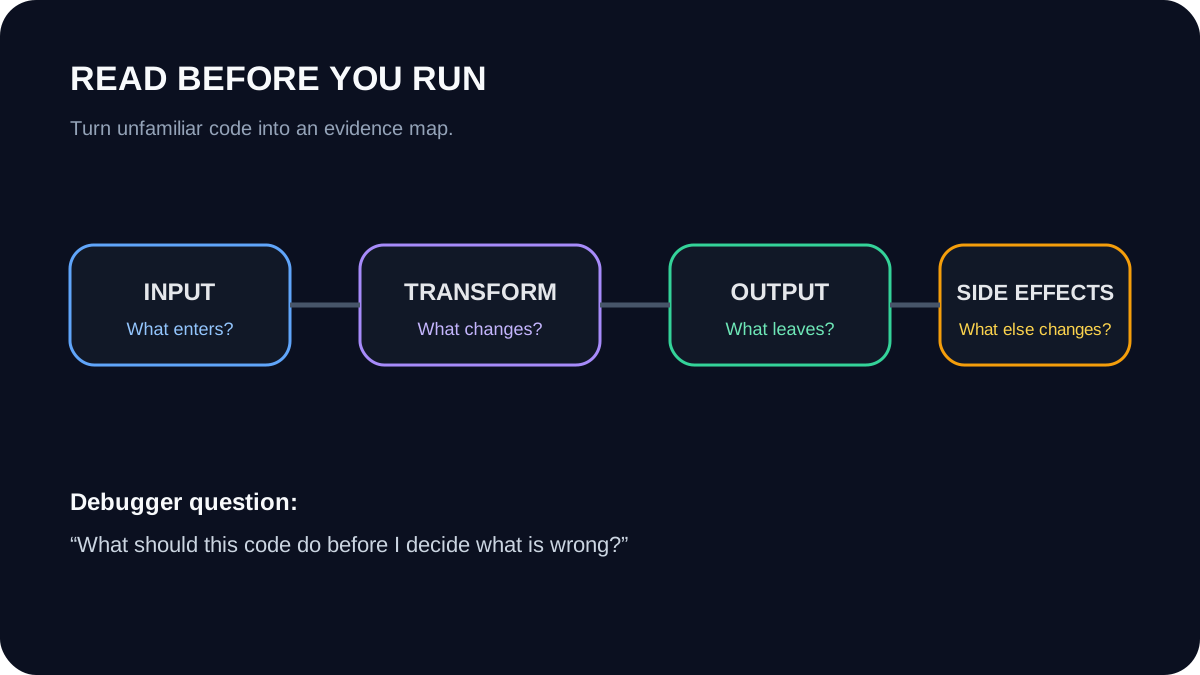
Start with inputs, transformation, output, and side effects. Do not debug a line until you know what the code is supposed to achieve.
Software • 2027
Enter as a Python developer. Leave as a systematic debugger: observe, reproduce, hypothesize, isolate, inspect, fix, verify, explain and prevent real failures. The path uses code missions, tracebacks, state inspection, tests, logs, incidents and a strict final debugging mission.
شاهد تجربة حقيقية من داخل المسار قبل أن تبدأ
داخل المسار
Investigator Lens
مش مجرد وصف — دي معاينة من المحتوى الفعلي.
داخل المسار
صور وفيديوهات وأمثلة مأخوذة من المحتوى المنشور نفسه، حتى تعرف أسلوب التعلم قبل التسجيل.
Trace Strip
Python Gate | Read Before You Run
Assumption Radar
Python Gate | Read Before You Run
Prediction Contract
Python Gate | Read Before You Run
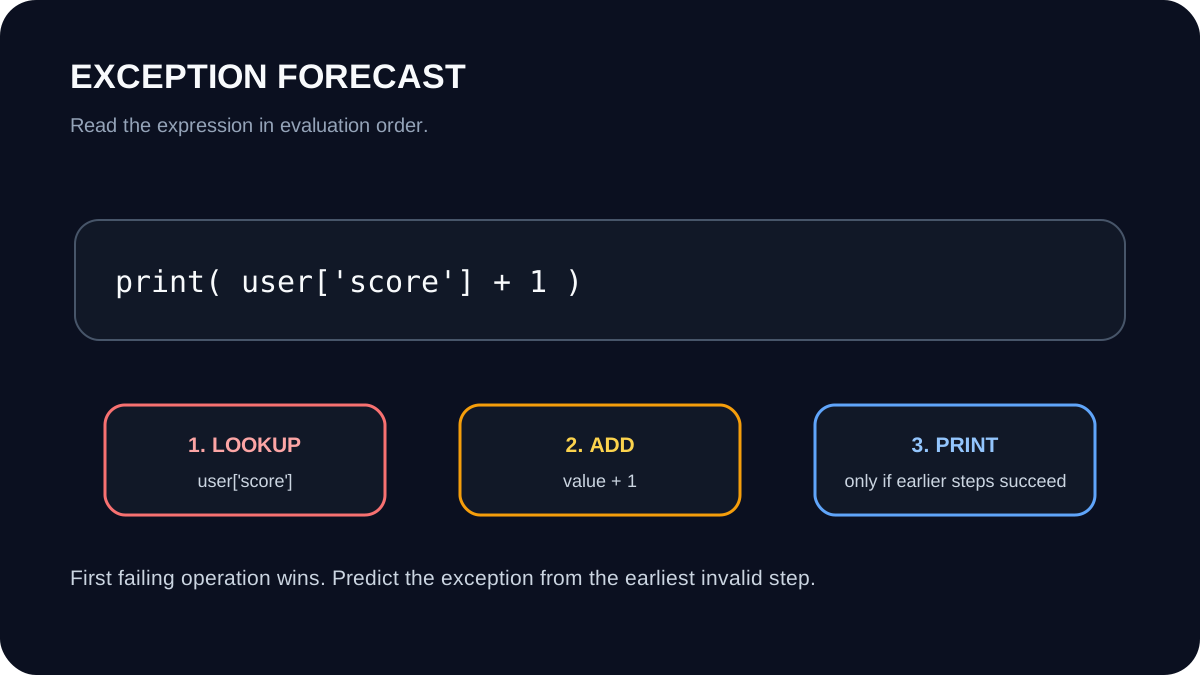
Exception Forecast
Python Gate | Read Before You Run
Start with inputs, transformation, output, and side effects. Do not debug a line until you know what the code is supposed to achieve.
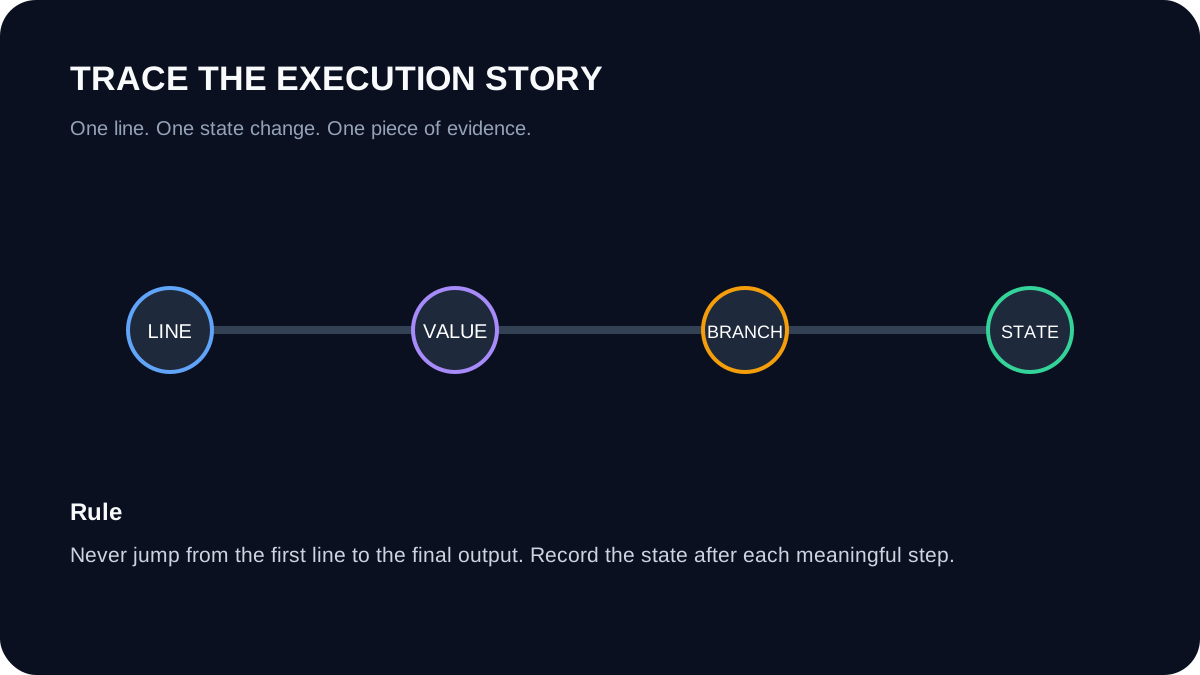
A trace is a sequence of state snapshots, not a vague mental impression.
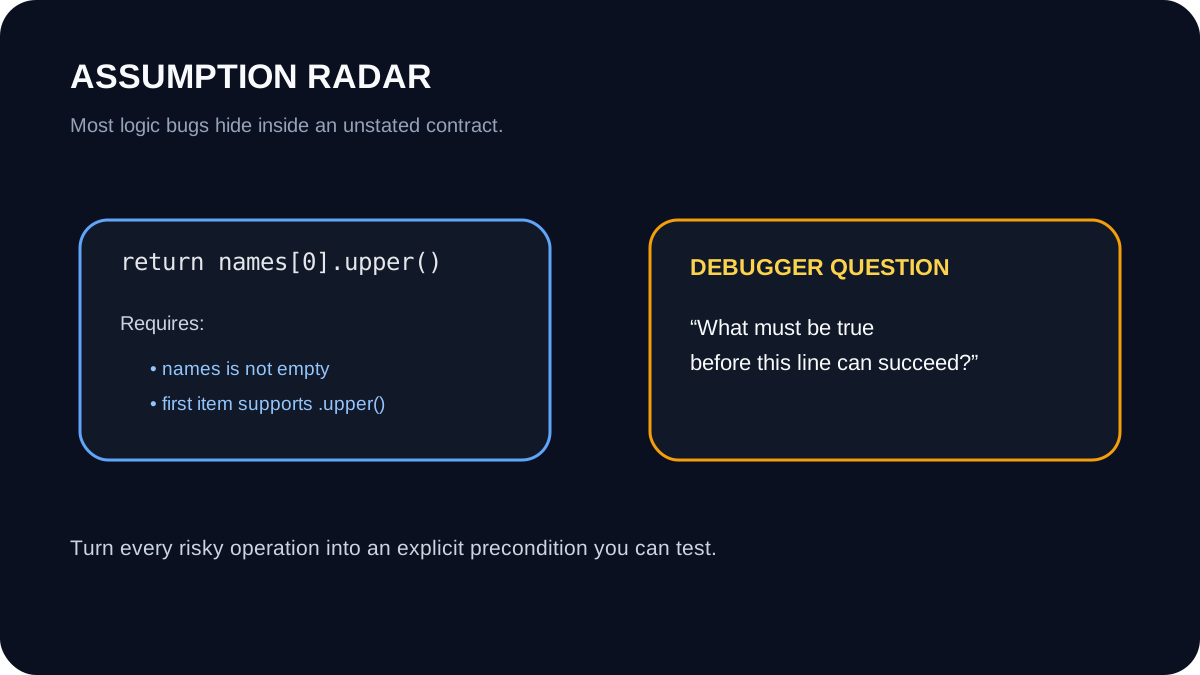
price = item['price'] assumes item is a mapping, the key exists, and the value is usable by the next operation.
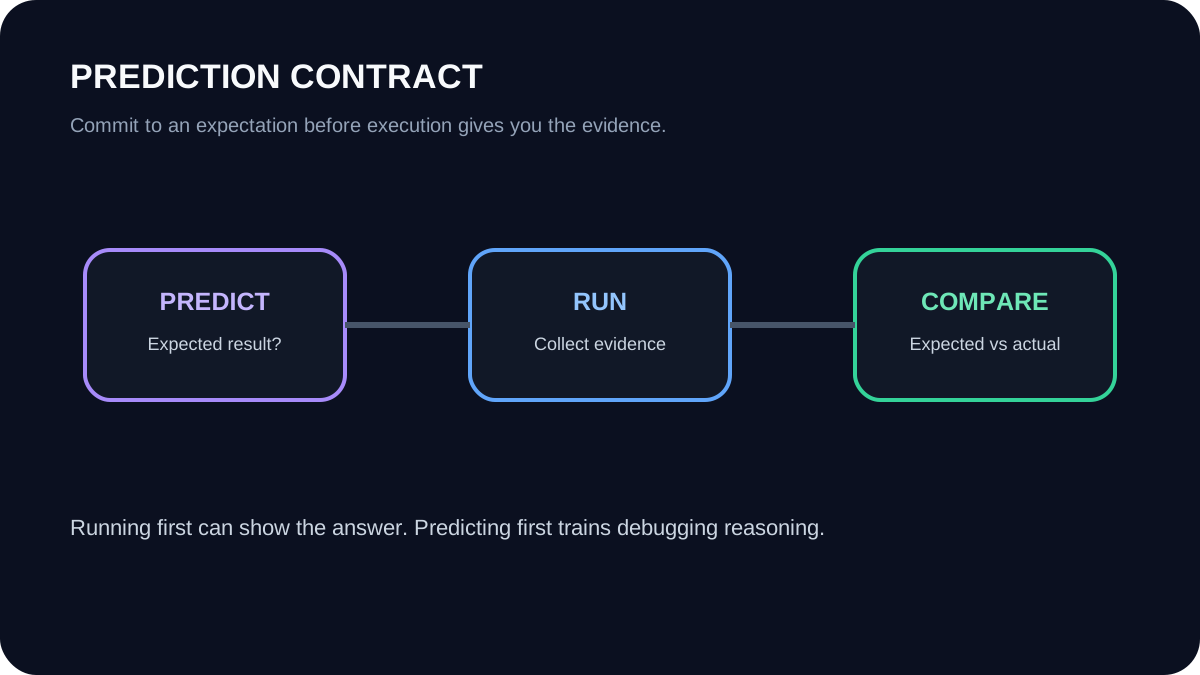
If you run before predicting, the interpreter gives you the answer but not the reasoning. A debugger writes the expectation first.
'3' + 2 → TypeError because addition cannot combine str and int directly.
Draw names as arrows to objects. Mutation changes the object; reassignment moves an arrow.
خطة التعلم
Read code, predict behavior and prove the Python foundation required for professional debugging.
Explain unfamiliar code intent from structure and names
Summarize what a code snippet is trying to do before executing or editing it.
Trace data and control flow by hand
Follow values, branches, calls and returns to produce a correct execution trace.
Identify hidden assumptions and preconditions
State the input, type and state assumptions that must be true for the code to behave correctly.
Predict stdout and return values
Predict observable output and returned values without running the program.
Predict the exception before Run
Identify the likely exception type and failing operation before execution.
Track state changes across execution
Track mutations and bindings so the final program state is explicit.
Target only the prerequisite weaknesses exposed by the gate, then return to the main route.
Locate prerequisite weakness from evidence
Use diagnostic mistakes to identify the exact Python prerequisite that needs review.
Repair a small failure without redesigning
Make the smallest correct change that restores the intended behavior.
Explain why the repair works
Describe the root cause, the fix, and what prerequisite knowledge prevented the mistake.
Move from symptom to reproducible evidence, then read exceptions and tracebacks like an investigator.
Separate symptom from root cause
Distinguish what the user observes from the underlying defect that produces it.
Define expected versus actual behavior
Write a precise expected/actual comparison that can be verified.
Collect evidence before editing code
Choose the most relevant code, input, traceback, log or state evidence before changing anything.
Reproduce the bug reliably
Create repeatable steps and inputs that trigger the same failure.
Form a testable debugging hypothesis
Turn an observation into a hypothesis that predicts what evidence should appear.
Change one variable at a time
Design an investigation step that isolates one factor without introducing new uncertainty.
Hunt wrong conditions, control-flow traps, off-by-one errors and edge cases that produce believable but wrong results.
Detect wrong comparison and arithmetic operators
Find operator choices that produce valid code with incorrect results.
Reason through compound boolean expressions
Evaluate and simplify and/or/not conditions to expose logical mistakes.
Repair branching without breaking other cases
Fix conditional logic and verify preserved behavior across representative cases.
Detect off-by-one and loop-bound errors
Identify incorrect start, stop and iteration conditions in loops.
Find premature return, break and continue bugs
Trace control flow to detect paths that terminate or skip work too early.
Verify every intended path executes
Use targeted inputs to prove loop and return behavior across branches.
Expose scope, aliasing, mutation, shared references and state leaks that make behavior change across calls.
Resolve local, global and nonlocal bindings
Predict which binding Python reads or writes in nested scopes.
Distinguish reassignment from mutation
Explain whether code changes a binding or mutates an existing object.
Debug scope-related state surprises
Use scope evidence to fix unexpected values without unnecessary globals.
Detect aliasing and shared references
Identify when two names refer to the same mutable object and predict side effects.
Trace list and dictionary mutation
Track in-place changes across functions and containers to locate unintended state changes.
Choose safe copying or ownership boundaries
Use copying or clearer ownership only where needed to prevent shared-state bugs.
Use breakpoints, stepping, stack frames and post-mortem inspection to observe execution without guessing.
Place breakpoints at decision boundaries
Choose breakpoint locations that maximize information instead of stopping everywhere.
Use step into, step over and continue deliberately
Select the execution-control action that answers the current debugging question.
Build a breakpoint investigation plan
Sequence stops and observations so each pause tests a hypothesis.
Read the call stack as a story
Use frames to understand how execution reached the current line.
Inspect locals and object state safely
Examine values and identities without accidentally changing the state being investigated.
Compare frames to locate state corruption
Find the frame where a value first diverged from its expected state.
Turn a reported defect into a failing test, fix it, turn the test green and keep the regression guard.
Convert a bug report into a failing test
Translate the reported symptom into deterministic input and expected behavior.
Write the smallest test that proves the bug
Remove unrelated setup while preserving the exact failure signal.
Keep the test red before changing production code
Verify the test genuinely detects the bug before attempting a fix.
Write precise assertions for behavior
Choose assertions that fail for the right reason and communicate expected behavior.
Isolate tests from shared state and side effects
Prevent order dependence, leaked state and external noise from hiding the real failure.
Use exception checks and basic mocks purposefully
Test failures and boundaries while mocking only dependencies that obstruct deterministic evidence.
Debug functions, objects, files, imports, packages, dependencies, configuration and runtime logging as one connected system.
Define a function contract
State valid inputs, outputs, side effects and failure behavior before debugging a function.
Debug arguments, defaults, *args and **kwargs
Find binding and default-value mistakes in function calls and definitions.
Verify return-value behavior across paths
Detect missing, premature or inconsistent returns using targeted cases.
Explain closure capture and lexical scope
Trace which outer variables a nested function captures and when their values are resolved.
Detect late-binding bugs in generated callbacks
Recognize loop-created closures that all reference the same final binding.
Repair captured state intentionally
Bind the intended value and verify each closure behaves independently.
Reason about async failures, races, blocking work, performance bottlenecks, memory growth and resource cleanup.
Detect forgotten await and coroutine misuse
Recognize coroutine objects, missing awaits and incorrectly scheduled async work.
Find blocking work inside async code
Identify synchronous operations that stall the event loop and degrade responsiveness.
Verify async fixes without hiding timing bugs
Use deterministic checks and explicit scheduling expectations to validate behavior.
Recognize race-condition symptoms
Identify nondeterministic behavior that depends on timing or interleaving.
Trace shared-state access across workers
Map reads and writes to shared data to locate unsafe interleavings.
Choose a synchronization or ownership fix
Select locking, isolation, immutability or ownership changes that address the actual race.
Read diffs, detect hidden behavioral risk, request regression protection and write useful review comments.
Read a diff for behavioral risk
Compare changed code with surrounding behavior to identify what could break beyond the edited lines.
Spot hidden edge cases and unsafe mutation
Identify missing boundaries, shared-state hazards and assumptions introduced by a change.
Write an actionable review comment
Explain the risk, evidence and a concrete verification request without prescribing unnecessary redesign.
Add defensive checks at real boundaries
Validate assumptions where invalid data can actually enter or cross a contract.
Request the right regression protection
Connect a discovered risk to the smallest useful automated test.
Balance clarity, safety and complexity
Reject fixes that hide the bug or add complexity without improving correctness.
Triage user symptoms, correlate logs and tracebacks, rank hypotheses and prove a safe production fix.
Turn a user symptom into an incident statement
Describe impact, scope, expected behavior and evidence without jumping to a fix.
Estimate blast radius from evidence
Determine which users, requests or data paths are affected based on available signals.
Choose the first high-value inspection
Select the safest evidence source that can most reduce uncertainty.
Correlate logs, traceback and recent changes
Build one evidence timeline from runtime signals and code history.
Rank competing root-cause hypotheses
Prioritize hypotheses by how much evidence they explain and what they predict next.
Reject a plausible but unsupported hypothesis
Use contradictory evidence to eliminate a tempting wrong explanation.
Solve a multi-bug codebase with strict anti-copy rules, minimal guidance, regression tests and a defensible root-cause report.
Reproduce and prioritize a multi-bug system
Create a debugging plan for interacting logic, exception, state, edge-case and performance failures.
Fix, test and protect the final codebase
Implement verified repairs and add regression tests without breaking correct behavior.
Defend the root-cause analysis independently
Explain evidence, discarded hypotheses, final fixes and remaining risks with minimal or no AI guidance.
Explain unfamiliar code intent from structure and names
Summarize what a code snippet is trying to do before executing or editing it.
Trace data and control flow by hand
Follow values, branches, calls and returns to produce a correct execution trace.
Identify hidden assumptions and preconditions
State the input, type and state assumptions that must be true for the code to behave correctly.
Python Debugging & Error Detection
Enter as a Python developer. Leave as a systematic debugger: observe, reproduce, hypothesize, isolate, inspect, fix, verify, explain and prevent real failures. The path uses code missions, tracebacks, state inspection, tests, logs, incidents and a strict final debugging mission.